
In today’s digital environment, misleading claims can spread across online news sites, social media platforms, blogs, forums, and public datasets in a matter of minutes. For organizations trying to monitor emerging narratives and make sense of fast-moving information flows, manual tracking alone is no longer enough.
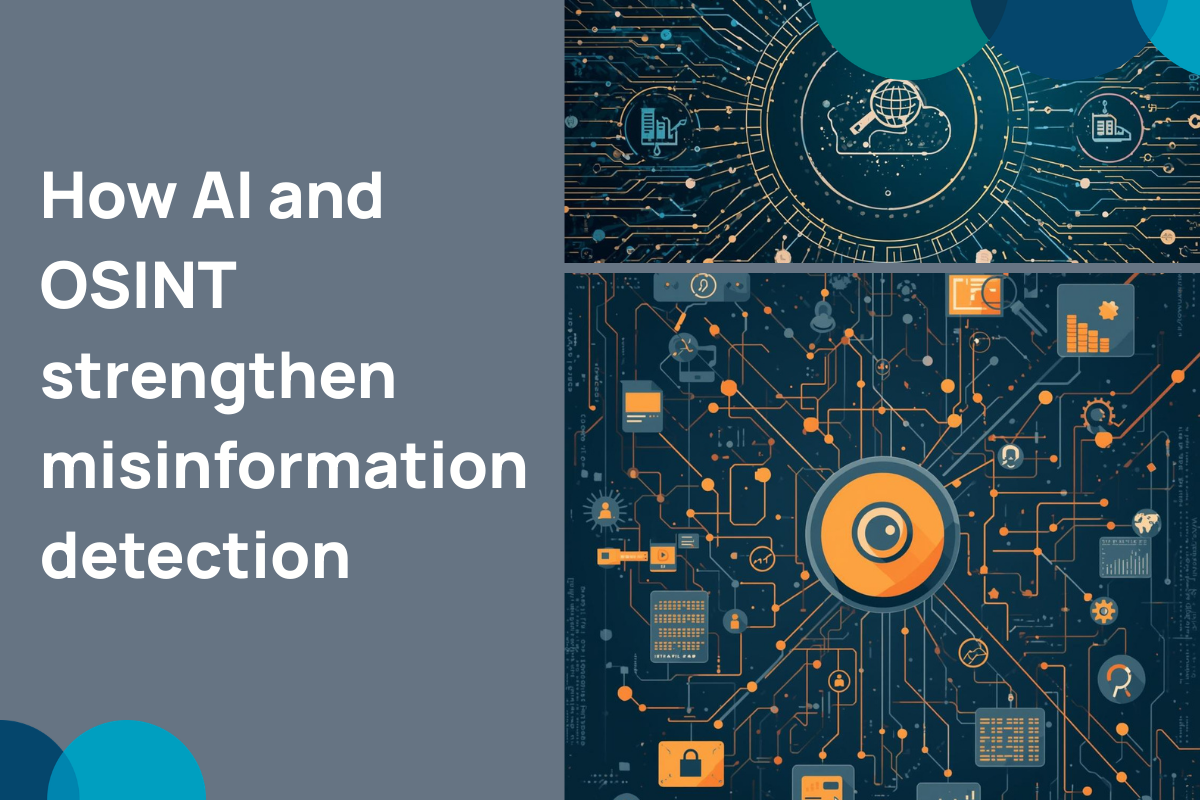
This is where the combination of Artificial Intelligence (AI) and Open-Source Intelligence (OSINT) becomes especially valuable. Used together, they can help analysts, researchers, media teams, and institutions detect suspicious patterns earlier, organize fragmented signals more effectively, and build a clearer picture of how narratives evolve across open digital environments.
Rather than replacing human judgment, AI-enhanced OSINT strengthens misinformation detection by making analysis faster, more scalable, and more structured.
Why misinformation detection has become more difficult
Misinformation is no longer limited to a single misleading post or an isolated false claim. It often appears as a broader pattern: a narrative repeated in different forms, across multiple channels, by different actors, and at different moments in time.
This creates several challenges.
First, the volume of content is overwhelming. Information professionals are expected to monitor digital conversations across a wide range of publicly available sources, often in real time. Second, misinformation is increasingly cross-platform. A claim may begin in one environment, gain traction in another, and later appear in more polished or mainstream-looking forms elsewhere.
Third, narratives do not remain static. They mutate, adapt, and re-emerge in response to events, public reactions, or attempts at debunking. This means that identifying a single false statement is often less useful than understanding how a misleading narrative is built, repeated, and amplified over time.
That is why misinformation detection today requires more than monitoring mentions or spikes in activity. It requires the ability to identify patterns, relationships, and narrative dynamics.
What OSINT brings to misinformation analysis
OSINT provides the foundation for this kind of work. By drawing on publicly available digital information, it enables analysts to observe how claims move through the information ecosystem and how different data points connect.
A robust OSINT approach can bring together signals from online news, social media, forums and blogs, public datasets and more.
This broader view matters because misinformation rarely unfolds in just one place. To understand whether a claim is isolated, coordinated, recycled, or amplified, analysts need a cross-source perspective.
OSINT is also important because it helps move analysis beyond surface-level observation. Instead of asking only what is being said, it allows teams to ask more meaningful questions:
- where did this narrative emerge?
- which entities are involved?
- how is it spreading?
- has it appeared before in a similar form?
- are there signs of unusual amplification or repeated behavioral patterns?
How AI strengthens OSINT workflows
OSINT gives analysts access to relevant open-source signals. AI helps make those signals usable at scale.
When applied carefully, AI can support misinformation detection in several important ways.
Narrative extraction and clustering
One of the biggest difficulties in misinformation analysis is the sheer number of fragmented references to the same idea. A narrative may appear in slightly different wording across posts, articles, comments, and discussions.
AI helps by identifying recurring themes and grouping related content into broader narrative clusters. This makes it easier to see when apparently disconnected items are actually part of the same storyline.
Instead of looking at thousands of isolated mentions, analysts can begin to understand the main narratives, the sub-themes, and the emerging storylines shaping an information environment.
Entity recognition
Misinformation often gains traction by attaching itself to recognizable names, institutions, places, or events. AI-supported entity recognition helps identify these references across large volumes of data.
This is useful because it allows teams to map:
- which people, organizations, and locations are repeatedly associated with a narrative
- which events act as narrative triggers
- which actors appear central to amplification or discussion.
Entity recognition also improves consistency in analysis, especially when the same subject appears in multiple contexts or under slightly different naming conventions.
Pattern detection
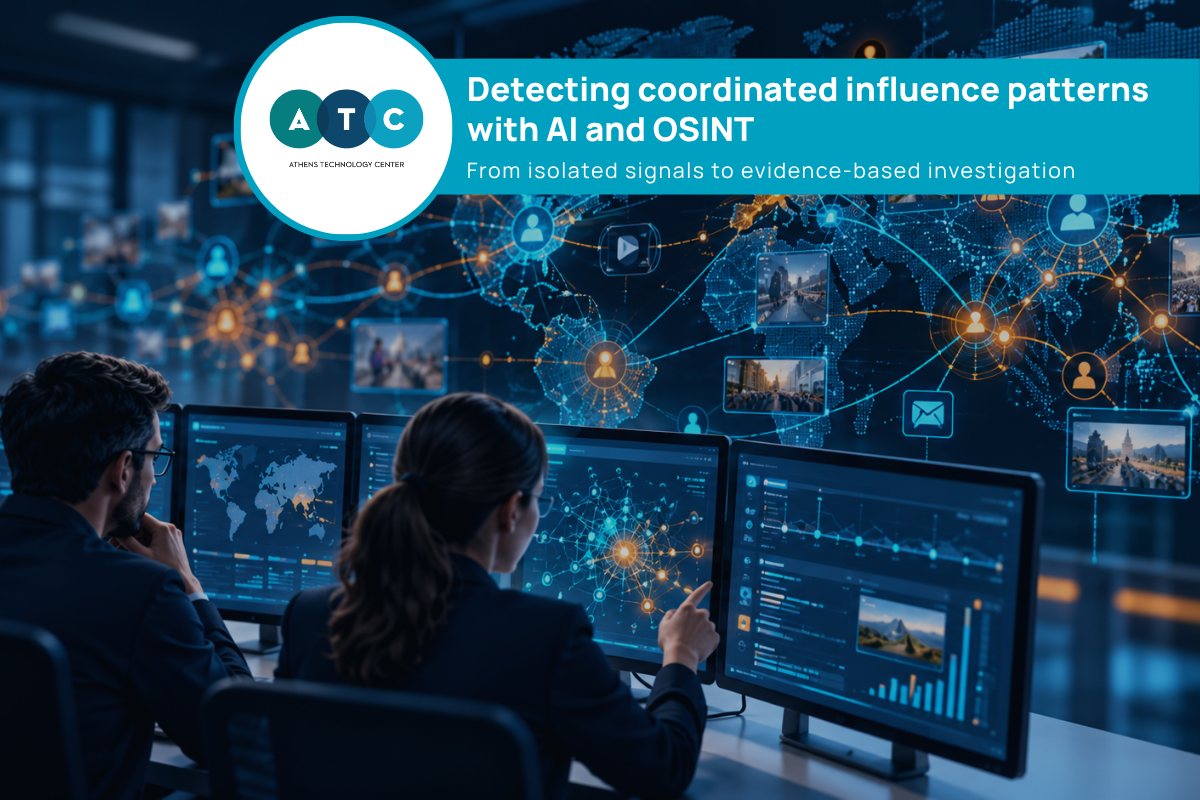
A misleading claim does not always stand out because of its wording alone. Sometimes the strongest warning signs come from how it spreads. AI can help surface patterns such as:
- unusual surges in repetition
- synchronized posting behavior
- recurring amplification around specific topics
- abnormal attention cycles
- suspiciously similar content flows across accounts or channels.
These are not proof on their own, but they are highly useful as signals for further investigation.
Timeline reconstruction
A claim may seem new when it resurfaces, even though it has already circulated in older forms. AI-assisted timeline reconstruction helps analysts trace how a narrative evolves over time. This can reveal:
- the first visible appearance of a claim
- moments of escalation
- narrative shifts after real-world events
- repeated attempts to repackage earlier misinformation in a new context.
For misinformation detection, this historical dimension is critical. It allows teams to distinguish between spontaneous discussion and the reactivation of a known narrative pattern.
Misinformation detection workflow
Intrested to see a practical AI + OSINT workflow for misinformation detection?
From fragmented signals to structured analysis
The real value of AI in OSINT is not simply speed. It is the ability to transform fragmented, high-volume open-source content into something more structured and actionable. Without that structure, teams can easily get stuck in reactive monitoring. They see noise, but not the relationships behind the noise. They see activity, but not narrative movement. They see posts, but not patterns.
AI helps bridge that gap. It supports a transition from raw monitoring to a more intelligence-oriented approach, where analysts can assess narrative emergence, entity relationships, unusual amplification, and the evolution of claims in a more organized way.
This is especially important for organizations that need to make sense of fast-changing digital environments without losing sight of context.
Why human verification still matters
Even the most advanced AI-assisted workflow should not be presented as a substitute for human verification.
AI can accelerate detection, improve scale, and highlight patterns that deserve attention. But it does not automatically determine intent, credibility, or factual truth. Those judgments still depend on expert review, contextual interpretation, and responsible verification practices.
This point matters even more in a digital environment shaped by synthetic media, content manipulation, and increasingly convincing forms of generated material.
What to keep with you
As digital ecosystems become more complex, misinformation detection requires more than speed. It requires context, structure, and the ability to connect scattered signals into a meaningful analytical picture.
AI does not remove the need for expert judgment. But when combined with OSINT, it can significantly improve how teams detect emerging narratives, trace claim evolution, and identify early warning signs of misleading or manipulative information activity.
The result is not automated certainty. It is a better-informed analysis.